
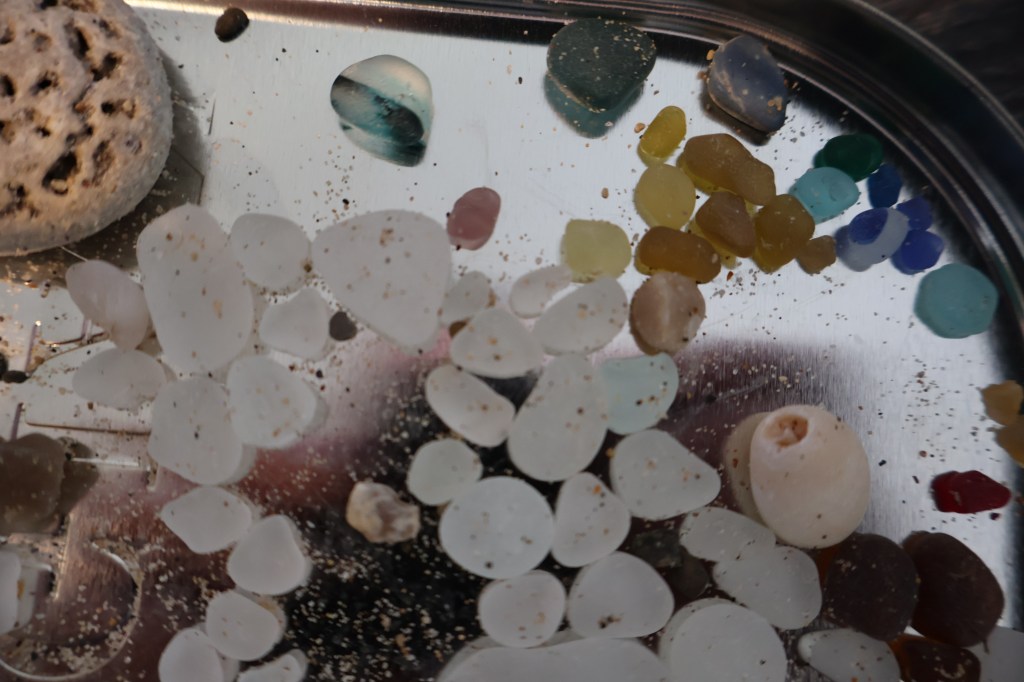
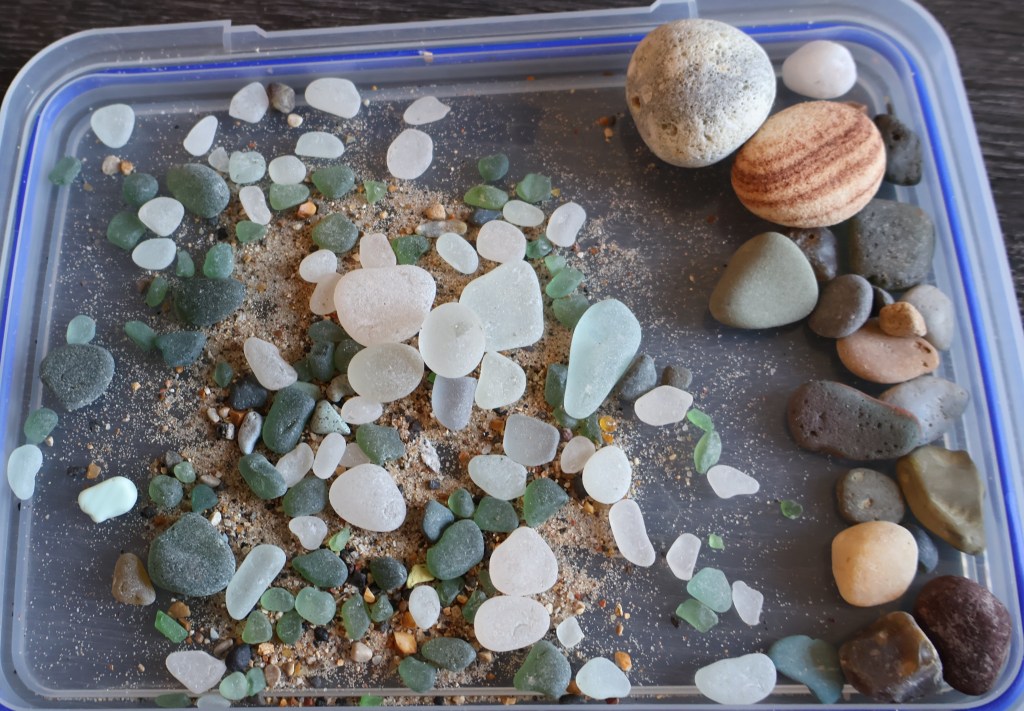
Since moving, we have been fortunate to have one of the most popular beaches for sea glass available to us, & only fifteen minutes away. I never knew that this was a popular pastime until about a year ago. Being part of the treasure-hunting spectrum, it had come across my radar, but to see children as young as two out with the parents & the elderly all and participating in finding the different colours of the rainbow…
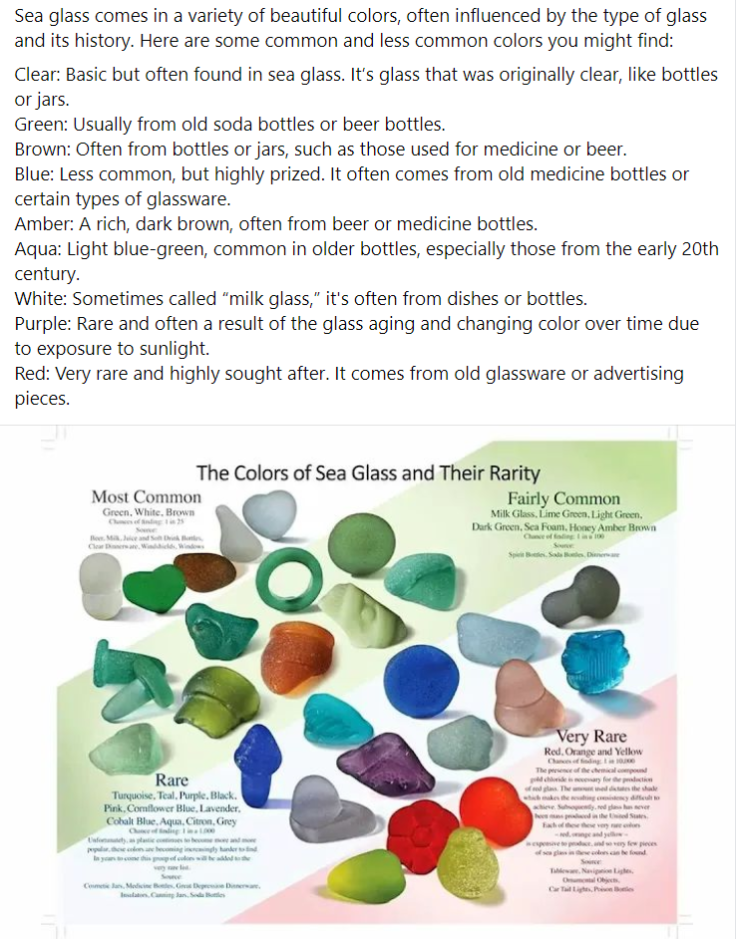
So where does this glass come from, & the why so many colours to find, of many various this fascinating and healthy way to get some fresh air & exercise, but where do the glass and its colours originate from ?



The History of Seaham Bottle Works…
as described by the Bishop Auckland, Ferryhill & Spennymoor Nostalgic History Society
The Seaham Bottle Works, established by John Candlish in 1853, grew into one of Britain’s largest glass factories, producing millions of bottles daily before closing in 1921. Its history includes significant community development through housing, schools, and a chapel for its workers. The works merged into the United Glass Bottle Manufacturers Ltd. in 1913, but ultimately closed due to overproduction. Today, the site’s legacy lives on, most notably in the abundant sea glass found on Seaham’s beaches.
John Candlish founded the Londonderry Bottle Works in Seaham in 1853, which rapidly expanded to become a major industrial enterprise. Candlish was considered a progressive employer, establishing a community around the works that included housing, a library, a school and a chapel for his employees. At its peak, it was one of the largest producers of bottles in Europe, capable of making over 12 million bottles per year.
By 1868, the works were renamed R. Candlish and Sons under his brother, Robert. Later, the family expanded to open four new bottle houses at Diamond Hall.
In 1913, a major industry restructuring led to the Seaham Bottle Works merging with other companies to form United Glass Bottle Manufacturers Ltd.
The works closed permanently in 1921 due to a United Kingdom-wide overproduction of bottles.
The extensive production and disposal of waste glass from the works is the source of the many sea glass pebbles found on Seaham’s beaches today. A reminder of the site’s industrial heritage, Bottle Works Road still exists in Seaham Harbour.



 udigidig.com
Leave a comment